Thursday, September 18, 2008

Quiet blog, busy gallery


I'm happy to say that after a packed month of preparation during August, Cullom Gallery opened on September 4th, the fist solo of exhibit of contemporary moku hanga (Japanese style woodblock prints) by Northampton, Massachusetts artist, Annie Bissett.
I met Annie last year while searching the web for contemporary Japanese woodblock printmakers. I probably looked at the work of over 200 artists; Annie's and names of a few others made it onto one small piece of paper. What I particularly like about Annie's prints is how beautifully made they are and, in their craftsmanship, how tied they are to the tradition of Japanese printmaking, yet how different the content is! As I move further into contemporary prints, I'm not interested in prints and printmakers who are just regurgitating the hackneyed styles and subjects of 19th and 20th century Japanese prints. Japanese printmaking has a long history that includes periods of both inspired growth and predictable commercialism. Whether it's Hokusai's genius at capturing humanity and humor in his ukiyo-e, or the exciting nascent years of the sosaku hanga movement before the War, or today, printmakers like Annie Bissett, who aren't just making one more print of giant koi or thatched-roof farmhouses. These are the prints and the artists I'm after, those learning from the old tradition, but who expand upon it. In the end, these are the artist's that keep Japanese printmaking alive.

The Annie Bissett exhibit, which runs through November 1st, includes prints from 2006 to the present. It's remarkable to consider that Annie has only been making prints for three years, after taking a printmaking class with New Hampshire printmaker, Matt Brown in 2005. Prior to printmaking, Annie had spent several decades as a successful commercial illustrator with clients like the National Geographic Society, the Wall Street Journal, and the Washington Post. She continues her illustration career while working printmaking time around illustration work. Her own practice of meditation also played into the content of some of her early work, while more recent prints are driven by Annie's interest in mapping, locations, and the human impact, for better or for worse, upon a place. Earlier this year she completed a triptych called Three Prophets: tall narrow prints that start with satellite views of Bethlehem, Mecca, and Lumbini - the birth places of Jesus, Mohammed, and the Buddha. Over the maps Annie places symbols and texts that add the human layer to the place. Annie uses the same approach in another print that tells the historic tale of the U.S./Mexico border - the first of what will be a multi-print series of famous, or infamous, borders of the world.
Response has to Annie's prints been great thus far. Prints from all editions are still available, though just a few are left in some cases. I'm also excited that Annie will be in Seattle for the exhibit's October 2nd reception from 6-8 pm at Cullom Gallery. She will then stick around Seattle and be back in the Gallery Saturday afternoon,
October 4th for an artist's talk at the Gallery at 2 pm. Please give the Gallery a call at 206.919.8278 if you can make it, or just stop by too.

Wednesday, July 23, 2008

Only on the web...


I have to share these two cool online viewing tools I've been enjoying lately.  My web designer, Stephanie Krimmel, showed me the first, and the second I found while looking for more information about the Boston MFA's collection of Japanese postcards.  Both are beautiful examples of how the web can greatly enhance our enjoyment of art.  Yep, I said it.  The web can enhance our experience with art.  I know that borders on heresy in many circles, but I think you'll agree that these online exhibits go a long way toward elucidating two collections that would otherwise be difficult to get your mind and your eyes around, in a single sitting. And in the case of the first example, would be impossible to see in a visit to a single museum (check it out to learn more).  Does anyone else have favorite tools like these that they visit?  I'd love to add a sidebar list to Megane.

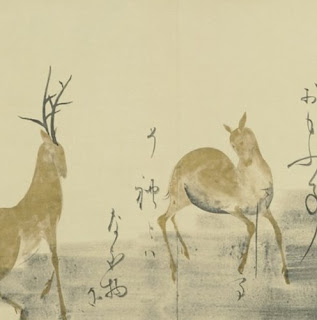
My first fave is the Seattle Art Museum's Deer Scroll exhibit.

(from the Deer Scroll)

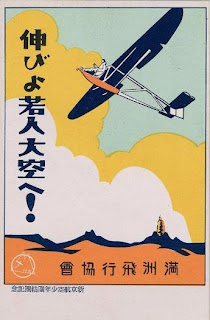
The second is the Museum of Fine Arts, Boston's exhibit of The Art of the Japanese Postcard

(one card from the Lauder Collection, MFA, Boston)

Saturday, July 12, 2008

Solitude, by Naoko Matsubara

Japanese Canadian printmaker Naoko Matsubara (b. 1937) based the eleven black and white and color woodcuts of her portfolio, Solitude, on an chapter of the same name from Henry David Thoreau's, Walden (1854) which the famous naturalist and transcendentalist wrote during his years living alone on the shore of Walden Pond.  I am so excited to have the complete suite of these prints for sale and on exhibit in my gallery this summer.  Like Matsubara, who made a number of trips to Walden Pond as she designed her print series, I made a pilgrimage to Walden as a young teen with my family, during a summer-long cross country literary tour of the U.S.  As a child, I had readily absorbed my father's enthusiasm (he, a high school English teacher at the time) for the great New England writers and poets and in the ensuing years, I often recalled our excitement as we walked through dried leaves and around trees until we found the foundation stones of Thoreau's original cabin near the shore of Walden Pond.  Fast forward many years, and as I found my way into the field of Japanese prints, I was stuck to learn that someone else (imagine!) had also found a kindred spirit in the words and experiences of Thoreau, and remarkably, had translated her impressions into a set of Japanese prints!  It was as near to finding a message in a bottle as I had ever felt.  My initial excitement was quickly tempered though, when I found out how difficult is was going to be to find a complete folio of the prints.  Thirteen years later, I am thrilled to have this beautiful set -- these images that nearly spring off the page with joyous motion and power and infect us with Matsubara's thoughtful spirit, which has continued to pervade her work these many decades.  Sitting in my own gallery, writing to you about these prints some 20 years after the July day I spent on the edge of Walden Pond, I have to enjoy the moment and the sense that I am tying together two strands of my life. When the prints are sold, (and I encourage you to see the whole suite featured as the Special Exhibit during July and August at cullomgallery.com) I will have been happy to have them for a while and will hope that the next owner will find as much pleasure in them as I have.  


Saturday, June 21, 2008

Graphic Designer Tadashi Ohashi

Thanks to keeperdesign for your earlier comment and then for introducing me to the graphic work of Tadashi Ohashi (1916 - 1998). A major force in 20th century Japanese graphic design, Ohashi spent his early career in charge of graphics for some of Tokyo's major department stores before becoming the Art Director for Kikkomann Soy Sauce in the 1960s and 70s. His list of awards runs long. Here is a nice blog post from Jeremy Hedley at Antipixel.com about a folio of Ohashi's images that Kikkomann issued in the 1960s. With some searching, I was also able to find these three prints of vegetables. I hope to learn more about his career and work, and perhaps offer more through the gallery in the future.


Wednesday, June 18, 2008

More on reading Shank's Mare

I'm having a lot of fun with this book.  Though it's clear that a LOT is lost in translation, I'm still cracking up every few pages at the alternating whit and stupidity of Yaji and Kita.  The book is also great for its small mentions of little, routine events of life along the Tokaido: the jingle of pack horses tied up outside an inn at dawn, or descriptions of pilgrims' travel clothes made of oiled paper or straw, or this great description:

  'Quickening their pace the three (Y., K. and a fellow traveller) walked on.  It was now nearly dusk and far away in the distance they could hear faintly the ringing of the sunset bell.  The birds were returning to their nests, and the songs of the hungry postboys, as they hurried their packhorses along, sounded spiritless.  At last the three travelers arrived at Mishima, where the girls at the inns on both sides of the road began their usual chorus of 'Walk in! Walk in!'"   

Then there's all the comedy.  I seriously see grainy Laurel and Hardy reels in my mind while I'm reading some of this.  In an early chapter Yaji and Kita arrive at an inn, hot and sweaty after a day of hiking on the Tokaido, in a local region where Japanese baths are positioned directly over a fire and are constructed with a thin metal bottom that conducts heat to warm the bath water.  When the bath is not in use, a wooden disk floats on the surface of the water and serves as a kind of lid.  When the bath is used, the bather pushes the disk down to the bottom to cover the hot floor.  Of course Yaji and Kita, despite being 'gentlemen from Edo' (a distinction every country innkeeper, waitress, or fellow traveler hilariously bestows upon them) are hopelessly clueless to the etiquette of such a bath.  Yaji disrobes, takes the cover off, and leans it against the wall.  He jumps in and immediately singes his feet.  Yowling and complaining to Kita who is in the other room, Kita answers that Yaji is just being picky and that the water is fine, he just needs to adjust to the temperature.  Looking around for something to project his feet, Yaji finds a pair of wooden clogs which he dons and proceeds to enjoy a leisurely soak without a word to Kita about the scorching metal or his make-do solution.  When it's Kita's turn, he jumps in, burns his feet badly, and jumps out perplexed by how his friend managed to soak so long.  Yaji replies that it was just as Kita said, the water is fine once you get used to it.  Yaji leaves so he won't laugh and spoil the joke, and Kita looking around, finds the wet clogs and puts two and two together.  He slips them on, gets back in the water, and starts to sing and dance, remarking at how enjoyable his bath is.  Surprised, Yaji runs in, notices that the clogs are gone from their hiding place, but plays along with the joke anyway.  The laughing ends abruptly though, when Kita's dancing causes the thin metal bath floor to crack, flooding the hot fire, and sending up clouds of blistering steam.  More yowling and laughing follows, Kita must pay off the inn keeper with a hefty sum of 300 coppers, and the two sleep off their latest humiliation then rise at dawn ready for whatever the day will bring.  

Tuesday, June 3, 2008

Yaji & Kita


This week I'm going to start reading the late Edo-period novel, Hizakurige, or 'A Shank's Mare Tour of the Tokaido' written by Juppensha Ikku between 1802-22.  The one and only translation into English is by Thomas Satchell from 1929.  A very old and obscure Japanese novel in a dusty translation - yawn, you may say, but the more I look into it, the more it sounds like this Laurel & Hardy meets Easy Rider tale is actually a great read.  I'll let you know.  

I came across a reference to the Satchell translation in Tsuneo Tamba's invaluable reference to Hiroshige while researching a print by the artist which turns out to be from one of Hiroshige's two incomplete series of comic views of the Tokaido based on the wanderings and bunglings of Yaji and Kita, the two main characters of the novel.  Here they are above, in my print, beside themselves with fear over a pile of burning trash(?!) (out of view to the left.)

Perhaps not the most incredible designs Hiroshige ever produced, they are still quite rare.  If anyone has other designs from either Shank's Mare series, I'd love to see them posted here.  Add a comment, or send me an email.  More on Yaji and Kita soon...


Saturday, May 17, 2008

Hokusai, the movie

I will never be as hip as my friend Jay, who sent me this great little movie a few months ago.  I like this film on so many levels - soft-handed animation of Hokusai's prints, a succinct art history lesson, all wrapped in a cool lo-fi quality.


Watching Tony White's creation (made way back in 1978, buy the way) gets me thinking about how frequently Japanese prints make their way into contemporary art and design, from little ubiquitous quotes like this tee-shirt ($49.99(!) on Ebay)

PATAGONIA Hokusai Wave T-Shirt L RARE ORGANIC COTTON

to full-fledged inspiration as seen in the art of Masami Teraoka, Roger Shimomura (really obvious examples - send me yours), or a recent favorite of mine, Eva Pietzcker, and how often most viewers aren't aware of the real source material.  This can get me down worrying about how my generation or the next will ever get excited about Japanese prints, (and sure, for my sake, start collecting them.)  Then I see something like this video for a (beautiful) Jose Gonzales tune, Hand on your Heart, (thanks again, Jay) and I perk up a little.


Is appreciation and knowledge of Japanese prints dying off?  Some days it feels that way.  Are there other 30 or 40-something Japanese print collectors out there?  Are you alone among your peers, or have you been able to turn any of your friends onto prints?  How do you regard Japanese in your life given that the world of conceptual art looms so largely in art magazines, interior design, contemporary art museums, and art fairs?  Are there other painters, printmakers, or video artists out there who find Japanese print inspiration creeping into your art?  If you're out there, I'd love to hear from you.